- Established in 1846
- The first Protestant church in Huntington County
- Part of an early Methodist circuit that included Huntington and Andrews
- Has worshipped in three different buildings over time
- Serving the Huntington community for over 175 years
- Located in the heart of the city, continuing a legacy of faith and service
Huntington Trinity United Methodist Church has been part of the Huntington community since 1846. As the first Protestant church established in Huntington County, it has played a foundational role in the spiritual life of the region.
In its early years, Trinity was part of a Methodist circuit that connected multiple congregations, including Huntington and Andrews. These circuits allowed churches to share pastoral leadership while growing strong, connected communities of faith.
Over time, the congregation has gathered in several locations, reflecting both growth and change while remaining rooted in its mission to serve Christ and the city of Huntington.
The Bell Tower
The tower chimes are the oldest part of Trinity Church, serving the Lord and the city of Huntington since 1915.
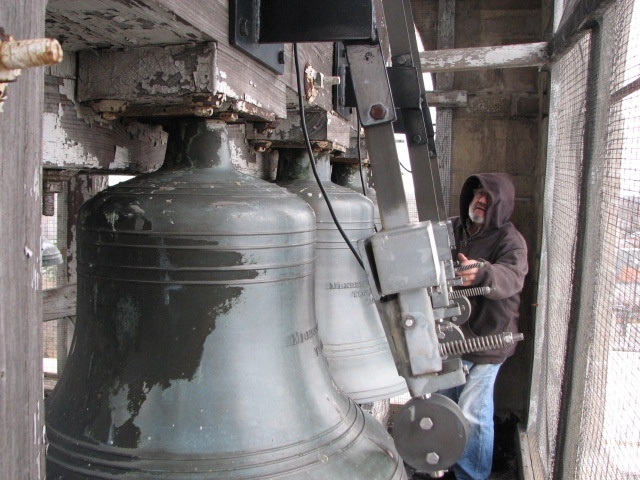
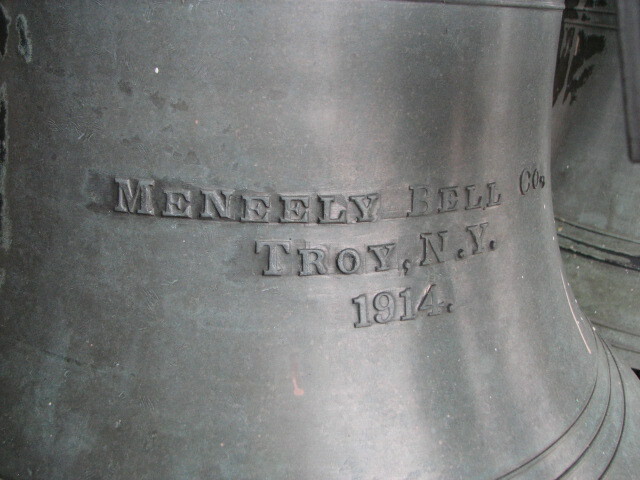
The present building was originally designed with a tower so bells could be added later. In 1914, Mrs. E.T. Taylor secretly ordered the bells and presented them as a gift to the congregation during the Christmas service. Cast by the Meneely Bell Company of Troy, New York, the original order included eight bells. Three additional bells were added, completing an eleven-chime set and greatly expanding the musical range.
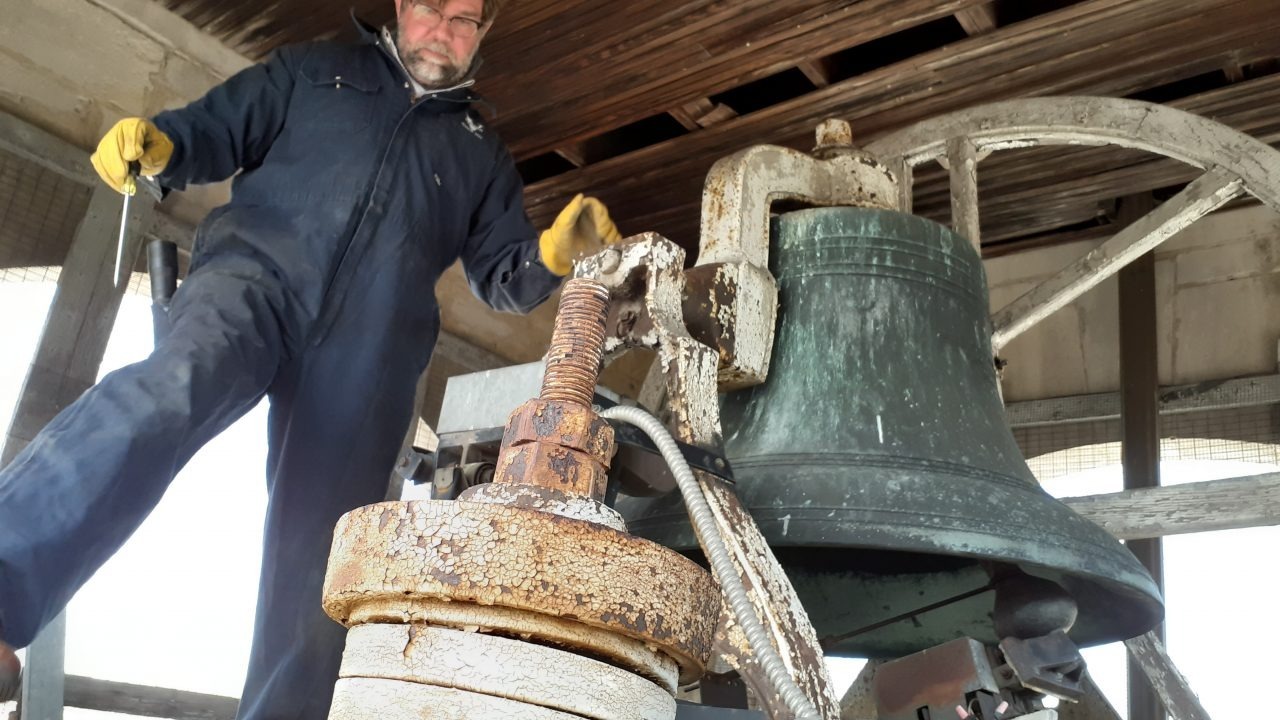
The bells were installed in time for the church’s dedication on February 14, 1915. After they were first played, Mrs. Taylor realized they could not be heard clearly from her home on Jefferson Street. With approval from the church trustees, the bells were removed and the tower was raised by approximately fifteen feet. During construction, the bells were lined along the front sidewalk of the church. Today, the heavy beams and mounted bells are still visible through the upper tower openings.
Originally, the bells were played manually from the third-floor tower room using a wooden chime stand. Each bell was connected to a lever by straps, ropes, and chains running through pulleys. Pressing down firmly on a handle would cause the clapper to strike the bell.
The bells range in size from 22 inches to a four-foot, one-ton swinging bell with a six-foot rope wheel. This larger bell could be rung manually by disconnecting the striker system, though it required significant effort. It often took two high school students to get it moving, and the motion could lift a 150-pound person off the floor. The large bell was rung in celebration on V-E Day and V-J Day in 1945. Soon after, it was made stationary due to structural concerns.
The full set of eleven bells weighs 8,379 pounds and includes the following tones:
F (2080 lbs), G (1535), A (1042), B-flat (800), B (713), C (538), D (432), E-flat (372), F (275), and G (263).
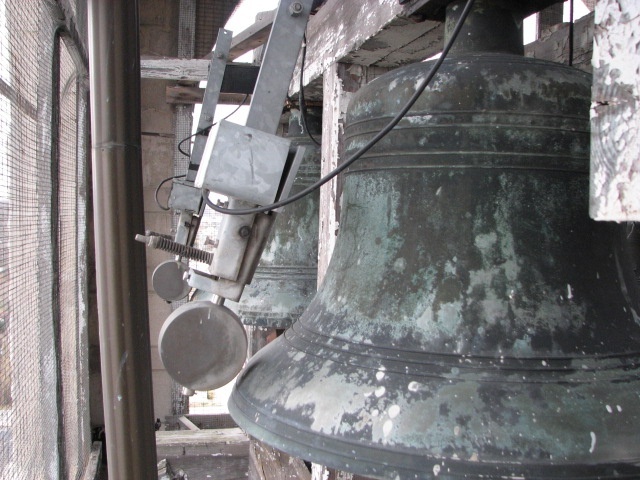
In 1956, the chimes were electrified and played from a keyboard console. Over time, the electrical system required frequent maintenance, often involving climbing ladders, opening trap doors, and navigating the tower structure to repair components.
In May 1996, a modern electronic system was installed by the Verdin Company of Cincinnati. The keyboard and master clock, which controls hourly chimes such as the Westminster melody, were relocated to the sound booth, while the main control systems were placed in the tower.
Inscribed on one of the bells are the words:
“To live in hearts we leave behind is not to die.”


About
-
Location